
The Day Starbuck, Minnesota, Made the World’s Largest Lefse
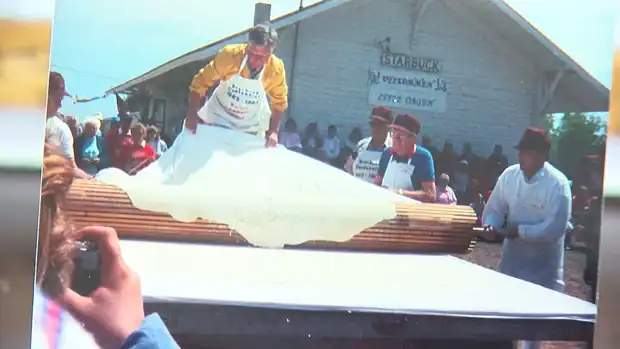
On July 1, 1983, the small town of Starbuck, Minnesota, decided to do something that was, in the most Scandinavian way possible, both ambitious and completely unnecessary:
They were going to make a piece of lefse so large that it would become a world record.
And they succeeded.
During Starbuck’s centennial celebration, a group of local men known as the Giant Lefse Baking Team took on the challenge of making the world’s largest piece of lefse. The finished lefse measured 9 feet 8 inches across and weighed approximately 70 pounds. The record remains associated with Starbuck today.
It Started With a Small-Town Idea
Starbuck is a small community in west-central Minnesota with strong Norwegian-American roots.
In 1983, the town was celebrating its 100th anniversary. Like many communities with Scandinavian heritage, lefse was already an important part of local family traditions.
But the people of Starbuck wanted to do something memorable for the centennial.
So they decided to make a giant lefse.
The idea may have sounded simple.
Making one 9-foot-wide piece of lefse, however, was anything but simple.
Making Lefse Nine Feet Wide
The team had to solve problems that don’t normally come up when making lefse at home.
How do you roll something that is nearly ten feet across?
How do you move it without tearing it?
And perhaps most importantly, how do you cook it?
The Starbuck team built oversized equipment specifically for the attempt, including a giant roller and spatula. Contemporary accounts describe a cooking surface roughly 10 feet by 10 feet, while the roller used to handle the dough was about 12 feet long.
The process required experimentation.
The team made trial attempts before the final event, adjusting the dough and the cooking process to get the enormous piece of lefse to hold together. Larry Kittelson, who helped develop the dough, later recalled that getting the dough right was one of the critical parts of making the record possible.
Then came the big day.
From World Record to Annual Tradition
The story didn’t end when the giant lefse was eaten.
In 1987, Starbuck began Lefse Dagen, an annual celebration commemorating the record-setting lefse and celebrating the community’s Norwegian heritage. The event continues to be associated with the historic Starbuck Depot, the site where the giant lefse was made.
Today, visitors can learn more about the record at the Starbuck Depot and its Lefse Hall of Fame, which preserves photographs, memorabilia, and stories from the event.
Why the Story Still Matters
The world’s largest lefse is a fun piece of Minnesota history.
But there is something bigger behind the story.
Lefse is not simply a food.
For generations of Norwegian-American families, making lefse has been a way of preserving heritage. Recipes are passed from grandparents to parents to children. Families gather around the griddle. Techniques are learned by watching someone who has been making lefse for decades.
In Starbuck, that tradition became a community-wide event.
A group of people took something ordinary—potatoes, flour, and the skills passed down through generations—and turned it into something extraordinary.
They didn’t just make a giant piece of lefse.
They created a story that their community could keep telling.
Could Anyone Break the Record?
More than four decades later, the Starbuck record continues to be remembered as one of the great feats of lefse-making history. The town itself still describes the 9-foot-8-inch, 70-pound lefse as the world’s largest.
And that raises an interesting question:
Could it be done again?
With modern equipment, better temperature control, improved materials, and a little Scandinavian stubbornness, perhaps.
But recreating Starbuck’s achievement would mean more than simply making a bigger piece of lefse.
It would mean bringing a community together around one of America’s most enduring food traditions.
At Bethany Housewares, we believe that is what makes lefse special in the first place.
The equipment matters. The recipe matters. The technique matters.
But ultimately, lefse is about the people gathered around the griddle.
And that is a tradition worth keeping.
Let’s Make Krumkake!
Here it is…. the Christmas Season! O M G! So exciting! So busy! How and the heck did it get here so fast?!?!?!
The holidays always have us thinking about our traditions and FOOD! Oh how I love delicious food! Especially all the delicious Scandinavian treats. Lefse, sandbakkels, krumkake, rosettes, the list goes on. We’ve already cranked out all our of lefse to get us through December. After that, well, it could be some serious withdrawals. :)
Anyhow, I thought it would be a great idea to share with you my latest krumkake session. I had the best help from my hubby. He’s a pretty darn good cookie roller! But unfortunately my photography skills haven’t improved any. But I think you’ll get the idea. I use my favorite recipe from master Scandinavian Baker, Beatrice Ojakangas. Love my copy of The Great Scandinavian Baking Book.
Super simple ingredients: Sugar, eggs, milk, flour and butter. That’s it!

So I missed the steps (again) of the mixing. But it’s just mixing the butter, sugar and eggs til their whipped and lemon colored. Add flour and milk til blended. And then fast forward to a preheated baker!
I love my electric baker. Consistent temperature and 2 at a time really speeds up the production. No matter, if an electric or stovetop baker, that you have preheated your baker. And maybe even a quick spritz of non-stick cooking spray before that first one goes on.
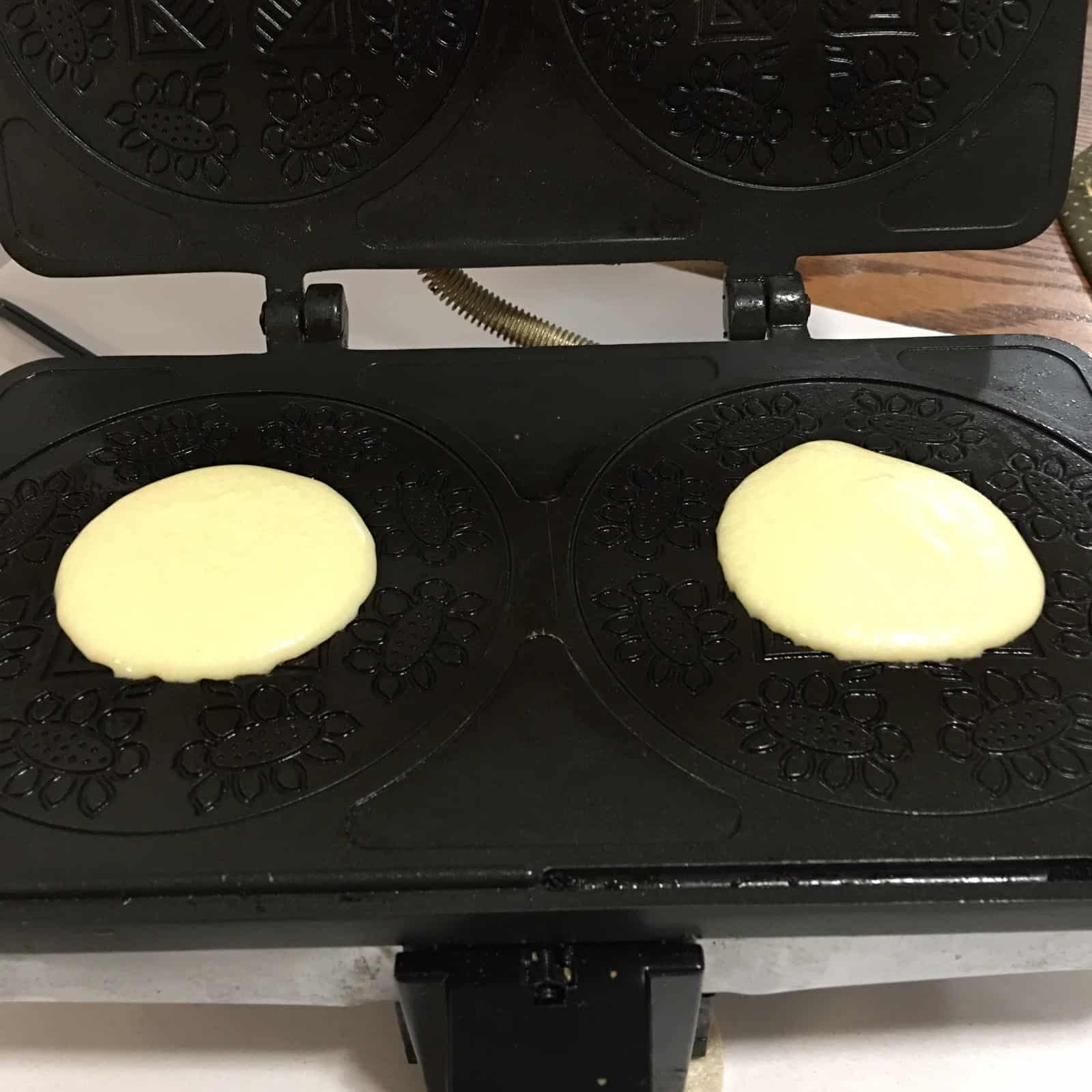
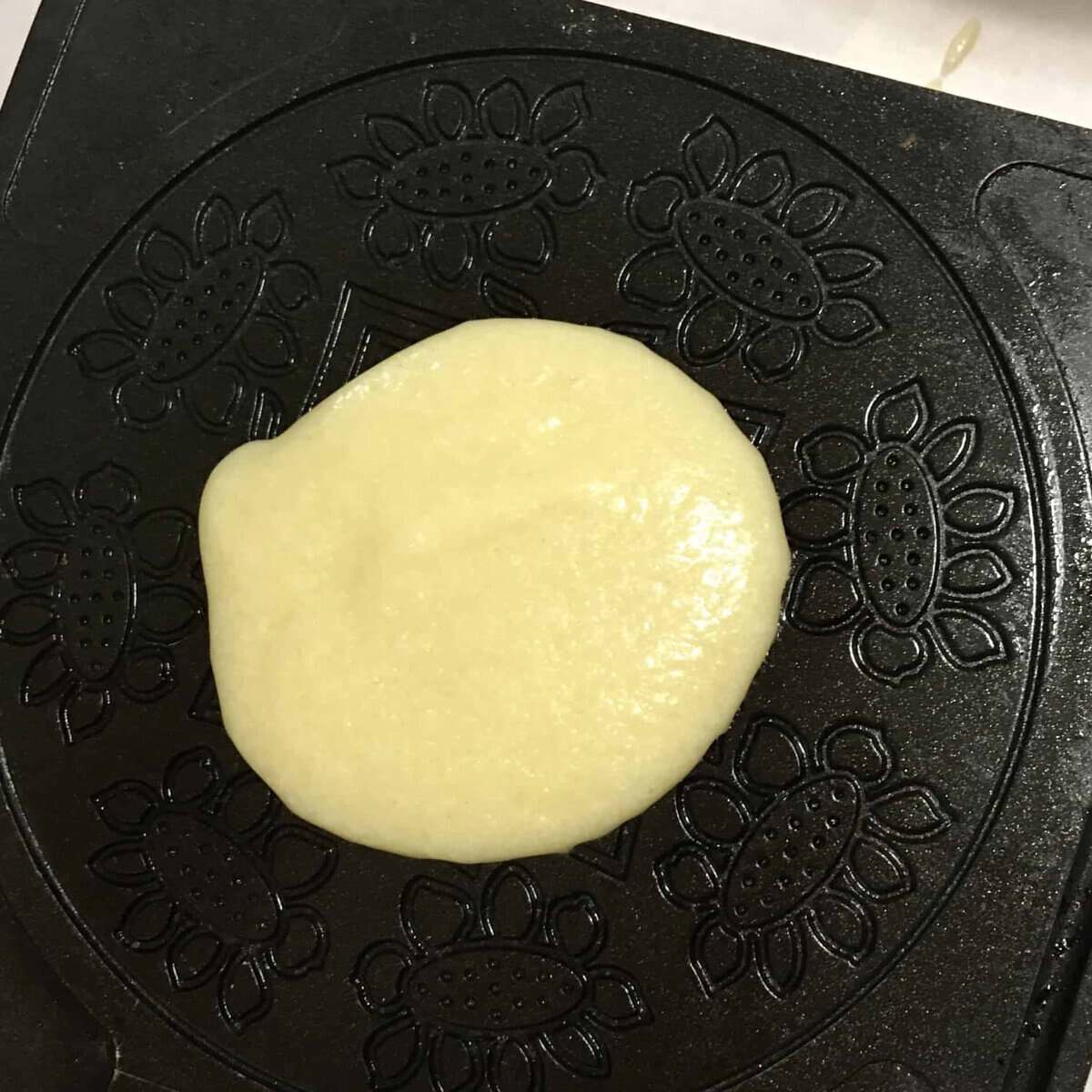
I use my regular ole spoon from my kitchen’s silverware drawer. It would amount to like a tablespoon of batter.
Close the lid and watch closely. BE CAREFUL of the hot steam!! Please. These babies take seconds, not minutes. Like 30 seconds or less. But cook to your preference. I like mine a little golden brown. Some like them really blond and others really golden brown. Do whatever your Grandma tells you to do!
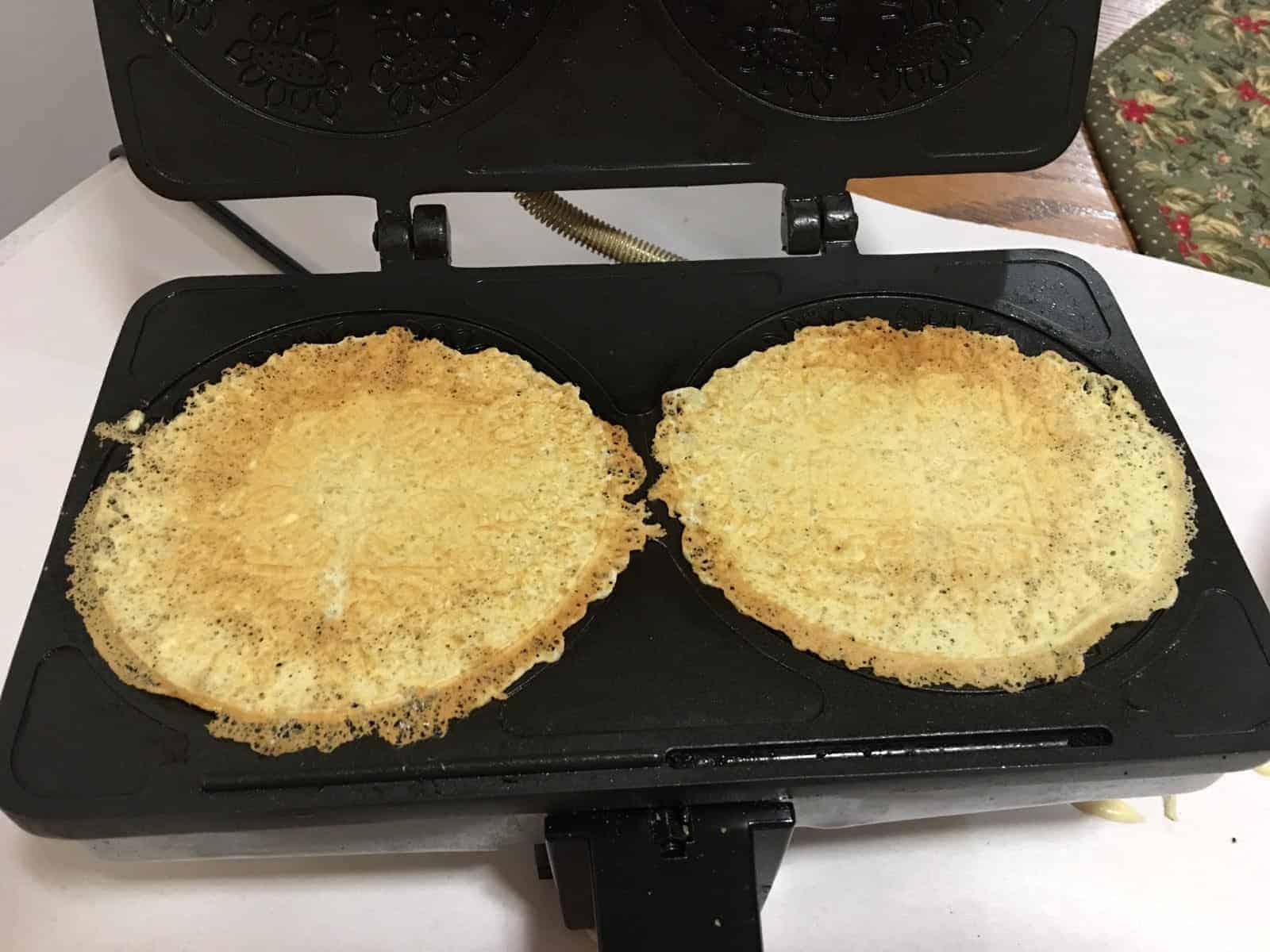
Nice and lacy, super thin. And I think this may have been the only 2 I didn’t get stuck together in the center!
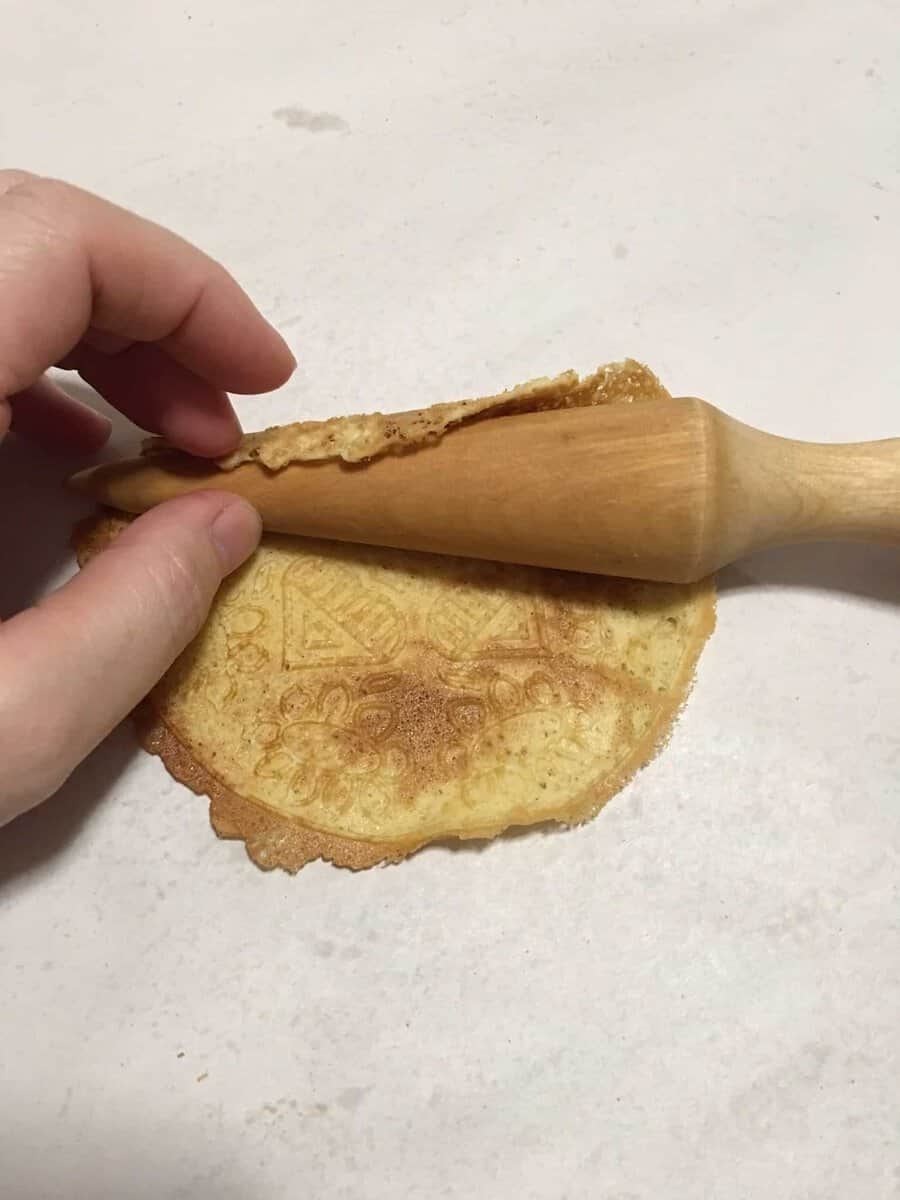
Slide of the baker and immediately roll over the cone shaped roller. Yes, they are hot, but you can’t waste any time here. I’m sorry to be so hard on you. But just trust me. Really, who needs fingerprints?
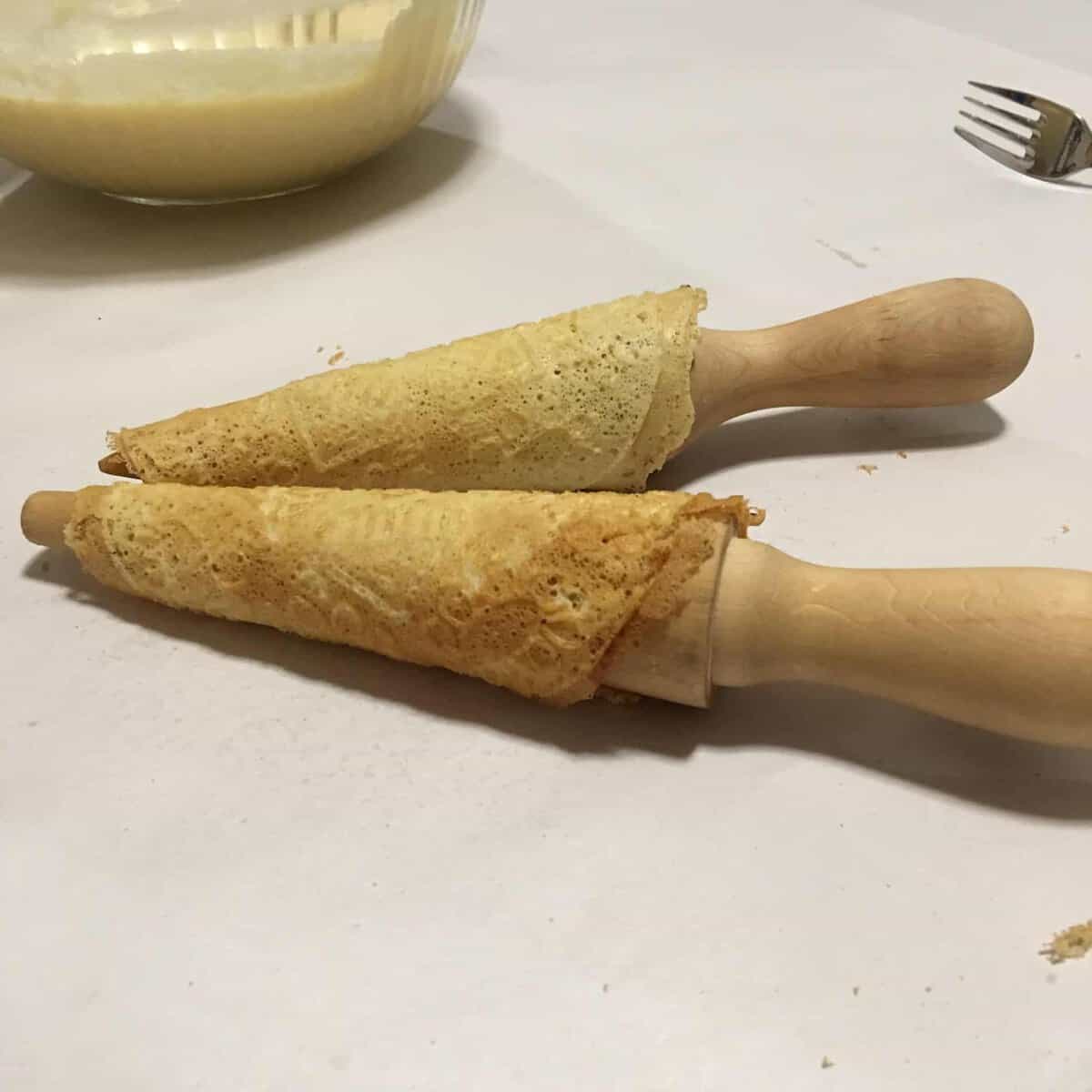
I like to rest my krumkake for a few moments with the seam side down. Keeps them in a nice cone shape.
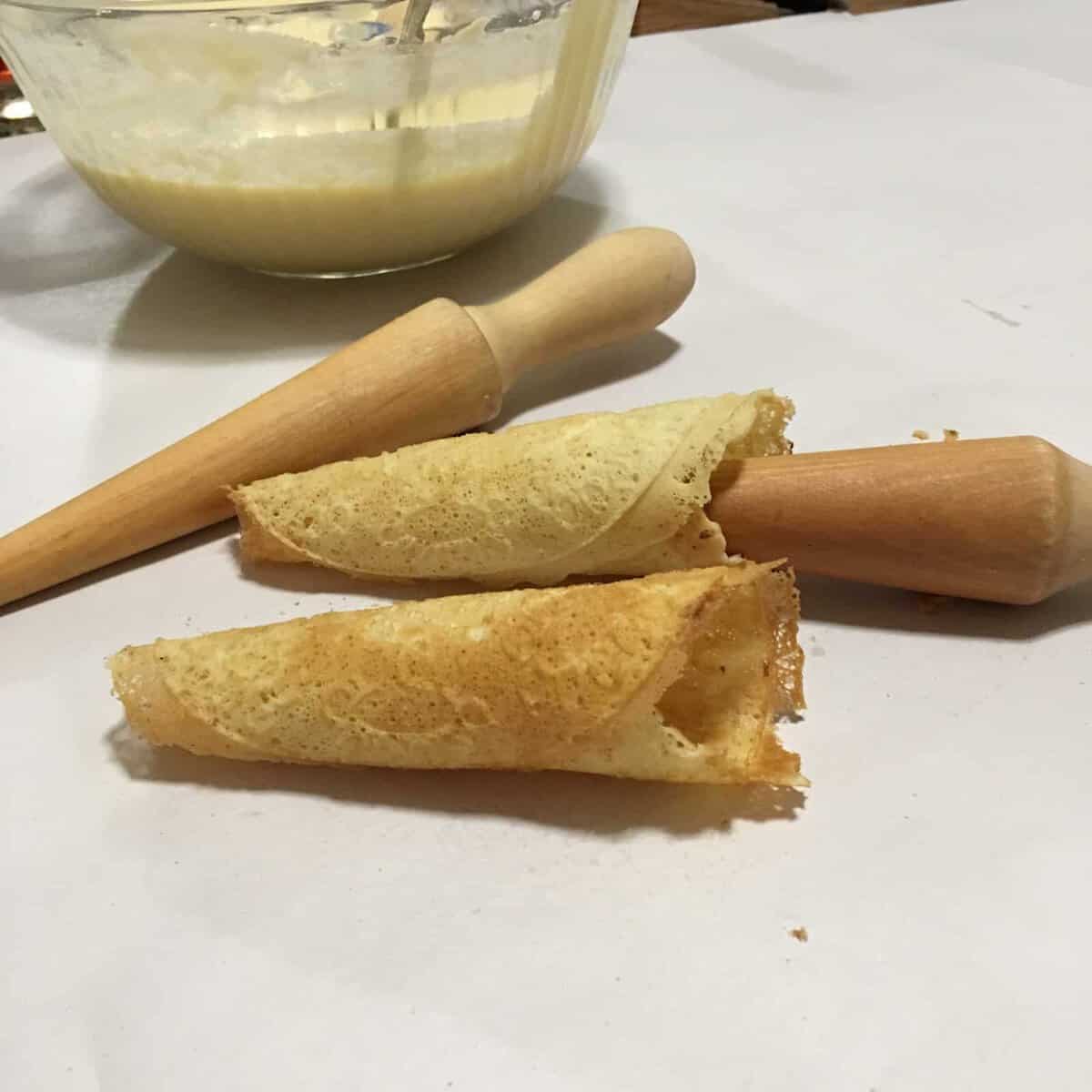
Then very gently slide off the cone rollers. It really is ideal to have 2 cone rollers when using a double baker.
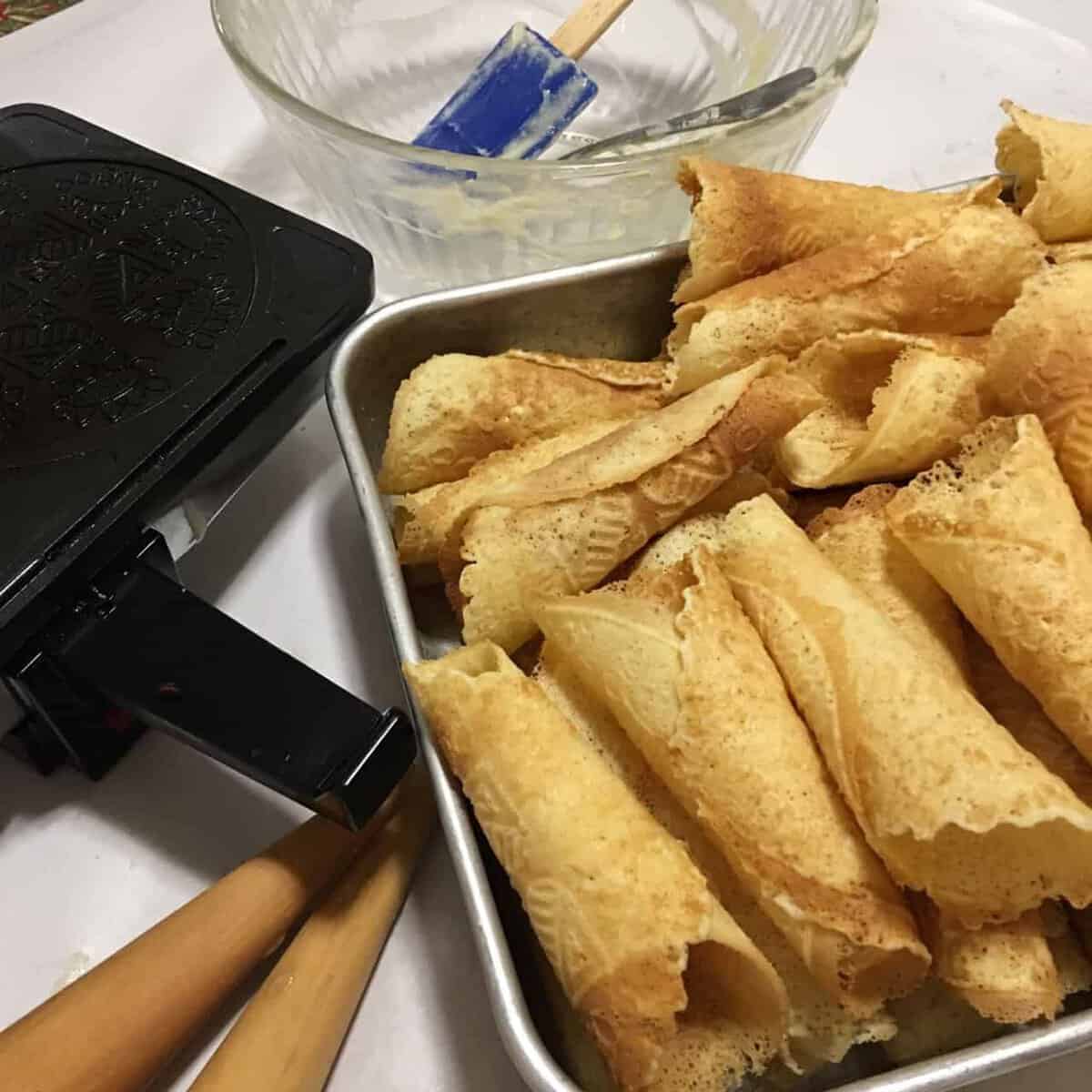
Beatrice’s recipe makes a nice batch, yielding a couple dozen or more. So make sure you keep these beauties out of the humidity when you’re done. It’s their biggest downfall. I only make krumkake in the winter because of it. In honesty though, they won’t last long. You can’t stop at one!
Now go on, you got this! Have fun making your own!!
Krumkake – From Beatrice Ojakangas
1 cup sugar
1/2 c softened butter
2 eggs
1 cup milk
1 1/2 c all purpose flour
water if necessary
In medium bowl, cream sugar with the butter. Beat in the eggs until mixture is light and lemon colored. Beat in the milk and flour until blended and smooth. If the mixture becomes to thick, add just enough water to thin.
Rosettes
Ingredients
- 2 eggs
- 2 tsp sugar
- 1 cup milk
- 3 tsp vanilla extract
- 1 c flour
- 1/4 tsp salt
Instructions
In a bowl beat together eggs and sugar. Stir in milk and vanilla. Combine with flour and salt until smooth. Heat oil for deep frying to 375 degrees. Heat rosette iron in the hot oil, then dip in batter. Fry 1 to 2 minutes. Remove onto paper towels.
Lefse (without potatoes!) by Vicky
Ingredients
- 4 Cups flour
- 2 tsp salt
- 2 cups scalded milk
- Butter....I use about 1 stick which I melt into the milk.
Instructions
Mix together and fry as usual.
Vicky wrote in asking us if people still make lefse without potatoes. Well, you bet they do! But you know what? I don’t know how! So sweet Vicky shared with us her families recipe! Thank you Vicky!
Here’s a litte from Vicky, “I use a 50 year old electric fry pan, my dad bought me for my wedding. I usually make a double batch and freeze some for my kids to take home. I learned to make lefse from my mom, Joan and also from my grandmother Lizzie, who used to make it on the top of her cookstove. I am glad I can share our family’s recipe.”
Enjoy!